SaaS Pricing and Go-to-Market Strategy Case Study
$136M More Bookings

Executive Summary
A $1B+ software provider built through acquisition was winning new logos but struggling to grow its existing accounts, and a private equity buy-out was approaching. Blue Ridge Partners ran one integrated SaaS pricing and go-to-market strategy engagement. We simplified bundles and pricing, redesigned the sales model around those bundles, and built a customer-by-customer cross-sell and upsell plan for more than 10,000 accounts, each with a specific bundle and price to pitch. The engagement increased annual bookings by $136M and added $24M in annual EBITDA from pricing alone, at fees about 25% lower than two separate projects would have cost.
Client Background
Why did a fast-growing SaaS leader need to act before a buy-out?
This vertical SaaS and technology provider had passed $1B in revenue, largely by acquiring more than 15 companies. New-logo growth was strong. Each acquisition, however, brought its own products, systems, pricing and sales team, so the commercial organization was far more complex than at similarly sized peers.
The executive team expected a private equity buy-out and wanted to tighten the growth engine before new owners imposed their own changes. It issued separate requests for proposals on pricing and on go-to-market, and chose Blue Ridge Partners because we were the only firm with equal depth in both. An integrated proposal also promised meaningful efficiencies in data gathering and analysis.
The Challenge
What was holding back SaaS pricing and go-to-market results?
Growth had stalled where it mattered most: inside the installed base. New-logo sales were strong, but most customers bought a single product and expanding them was proving difficult. Pricing was complicated and unsophisticated, discounting varied widely from deal to deal, and the bundles on offer were weak or missing. Buyers saw a confusing menu, and sellers had little guidance on what to propose next.
The go-to-market model carried the same fragmentation. Divisions sold overlapping products into the same accounts, the small-business segment was defined three different ways, and separate CRM instances limited visibility into shared prospects. Reps spent only about 35% of their time selling and 28% on finding leads. Separate reporting lines meant no single leader owned growth or sales productivity.
The cost was missed bookings, inconsistent customer experiences and margin lost to discounting. The central question was how to raise revenue per customer and sales productivity at the same time, quickly enough to matter before ownership changed, without running two disconnected projects.
The Diagnosis
What did the analysis reveal about pricing and sales coverage?
We examined five areas at once: market and segment opportunity, customer purchase and churn history, buyer and competitor interviews, a pricing survey with competitor price benchmarking, and a sales time study alongside the organization design. A single shared workstream fed every question. Five findings stood out:
- Bundling drove loyalty. Customers buying two or more products were 6.2x and 8.8x less likely to leave in each of two consecutive years than single-product customers.
- Pricing had headroom. About 79% of surveyed buyers would pay the optimal price and roughly 71% would pay the survey maximum, so a higher list price with staged discounting would raise revenue. Customer size did not change the optimal price.
- Growth sat in two places. Add-on services in large accounts, where switching costs protect the core product, and new logos plus add-ons in smaller accounts.
- Selling time was scarce. Reps could gain roughly 40% more selling time by moving lead generation and issue resolution to specialized, lower-cost roles.
- Teams overlapped. Several groups called on the same prospects, large-account teams spent a third or more of their time on small and midsize accounts, and reporting lines did not meet below the CEO.
The critical insight was that stickiness, pricing headroom and sales coverage were one problem. Simpler bundles, sold by an integrated team, could address all three.
The Solution
What did Blue Ridge Partners recommend to grow existing accounts?
We designed three connected initiatives, tailored to a company whose growth was constrained by its own complexity.
Initiative one: simpler bundles and disciplined pricing. The objective was to make buying and selling easier while capturing more value. We created good-better-best bundles for each segment, set list prices from the buyer survey and competitor benchmarks, and defined staged discount authority by role, from reps up to a deal desk. The expected impact was a higher net realized price with far less variance from deal to deal.
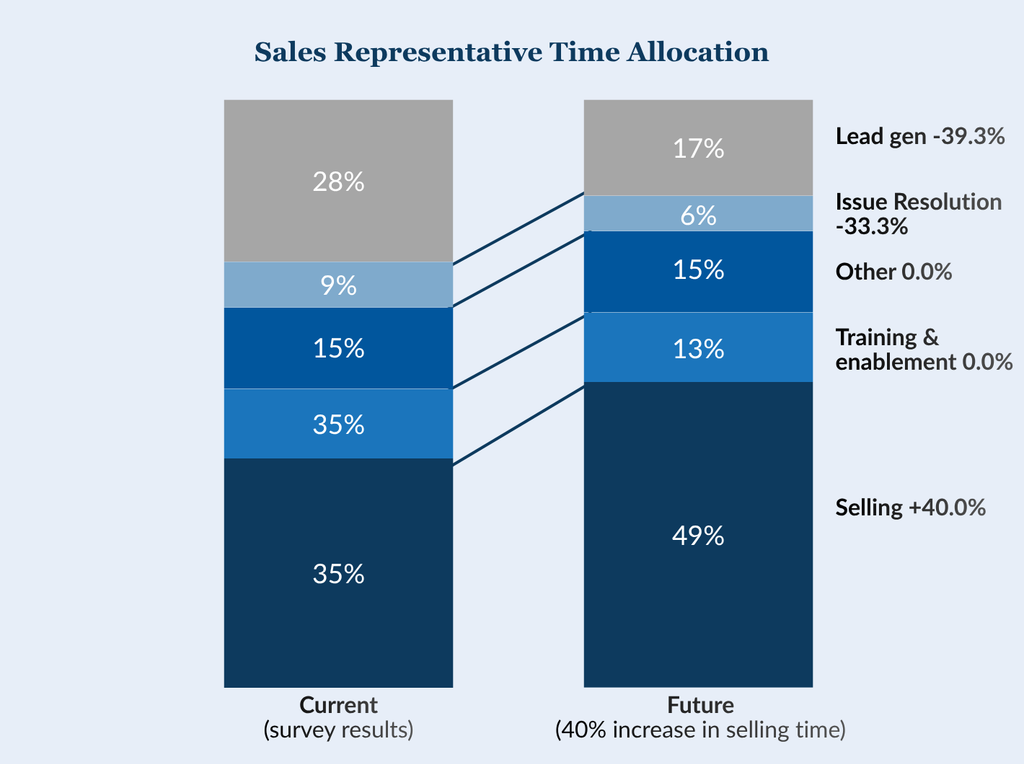
Initiative two: a cross-sell and upsell program built customer by customer. The objective was growth in the installed base with lower churn. Predictive targeting grouped more than 10,000 customers into cohorts by how much of a complete bundle they already owned and the price gap to the full bundle. Each cohort received a specific bundle, price and value message, such as a combined two-bundle offer at a modest discount for a customer already close to the full set. The expected impact was roughly 5% more annual contract value from renewal upsell alone.
Initiative three: an integrated go-to-market model. The objective was a sales organization built around bundles instead of product divisions. We prioritized non-core customers and small-business prospects, placed lead generation with dedicated business development roles, supported complex deals with solution engineers, and gave customer success ownership of renewals and add-on sales. A single accountable leader replaced fragmented reporting. The expected impact was about 40% more selling time per rep.
Running all three together also cut project fees by about 25%.
The Execution
How did the recommendations reach the sales floor?
The engagement ran 10–12 weeks in eight steps. Customer and competitor interviews, data analysis and internal interviews came first and served all three initiatives. A pricing and renewals survey and competitor price benchmarking followed, then separate but coordinated workstreams for the go-to-market model and for bundling, pricing and renewals. One integrated implementation roadmap tied them together, so pricing, sales coverage and renewal plays launched as a single program rather than competing priorities.
Commercial leadership co-developed the sales coverage model with us. The team reviewed several headcount scenarios, each showing the net change in headcount, the expected annual bookings and the added compensation cost, and chose the level of investment it was prepared to make. That shared ownership built confidence in the numbers before any organizational change was announced.
The bundle and price recommendations reached the front line in usable form. Every customer in the cohort file received a specific bundle, price and positioning, delivered in an Excel worksheet that sales and customer success teams could filter by segment, alignment and price gap. We added training and a recorded walk-through so teams could identify cohorts and prioritize outreach on their own.
The roadmap sequenced the work in stages:
- Stage one, about three months: revise the bundles through customer feedback and buyer interviews, sharpen each bundle’s positioning, finalize list prices, and set maximum discounts and thresholds.
- Stage two: communicate the new approach to the organization and adjust CRM and pricing tools to enforce approval guidelines.
- Stage three, roughly eight months: report on pricing execution against governance, analyze deviations and correct course as needed.
The Results
What financial impact did the engagement deliver?
The combined recommendations increased annual bookings by $136M. Pricing improvements alone added $24M in annual EBITDA, roughly 20 times the cost of the project. The renewal upsell program contributed an estimated 5.1% increase in annual contract value on its own.
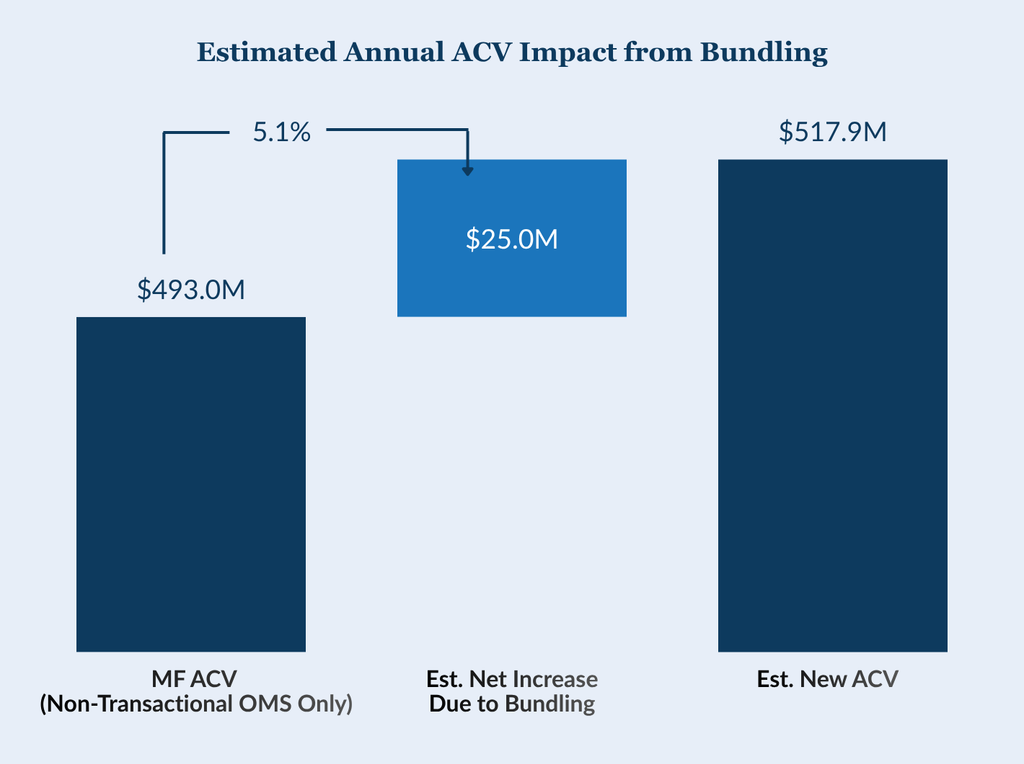
Operationally, the new model shifted rep time from 35% to a targeted 49% selling, with lead generation falling from 28% to 17% and issue resolution from 9% to 6%. Every customer also received a specific next-best bundle recommendation, and discounting moved from rep discretion to a governed, role-based structure with clear escalation paths to managers, directors and a deal desk.
The bookings and EBITDA figures draw on customer-level cohort models, buyer survey results, competitor price benchmarks and the sales time study, with the coverage model netted for added compensation cost. Integrating pricing and go-to-market work also lowered project fees by about 25%, because one data and interview effort served every initiative.
How did the company keep the gains going?
Discount governance is built into the sales process. Maximum discounts by role are documented, communicated to the organization and enforced through CRM and pricing-tool approval rules. Management reports on pricing execution against that governance, studies deviations and corrects course, so discipline does not erode as deals get busy at quarter end. Clear owners for bundles, pricing and renewals keep each piece of the program accountable.
The cohort worksheet, training and recorded walk-through let sales and customer success teams refresh their targeting as customers add products. Customer feedback keeps the good-better-best bundles clearly differentiated. Future opportunities include extending bundle-based selling to additional segments and refining cohort priorities as buying patterns shift.
Where might your company be missing growth in existing accounts?
Companies built through acquisition often share this pattern. Strong new-logo growth masks customers who own a single product, discounting that varies by rep and overlapping teams calling on the same accounts. The revenue is not missing from the market. It is hidden inside the installed base and the commercial model.
This case shows what happens when SaaS pricing and go-to-market strategy are solved together: simpler bundles, governed pricing and a sales organization focused on selling produced $136M in added annual bookings. Leaders can start by asking how many customers hold one product, how much discounting varies across deals and who owns growth end to end.
If those answers are uncomfortable, let’s talk. Contact Blue Ridge Partners to discuss your pricing and go-to-market opportunity.